
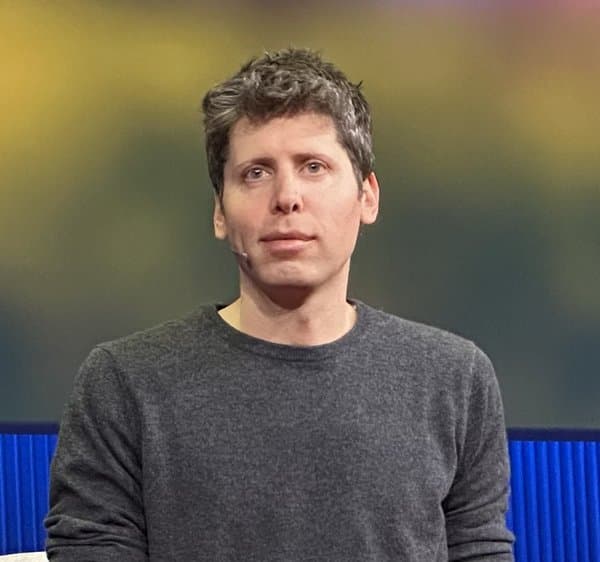
The 15 People Who Built Generative AI
Generative AI — tools that write, draw, code, and talk back — feels like it appeared overnight in 2022. It didn't. It's the result of roughly 15 years of breakthroughs stacking on top of each other: a dataset that gave neural networks something real to learn from, a training trick that let machines create instead of just recognize, an architecture that made language modeling scale, and a handful of people who turned all of it into products hundreds of millions of us now use every day.
This guide introduces the 15 people who built generative AI — in plain language, with what they actually did, and what they're working on now.
Quick-reference table
| # | Name | Best known for | Role today (mid-2026) |
|---|---|---|---|
| 1 | Ian Goodfellow | Inventing GANs | Research Scientist, Google DeepMind |
| 2 | Ashish Vaswani | Lead author, "Attention Is All You Need" (Transformer) | Co-founder, Essential AI |
| 3 | Noam Shazeer | Co-inventor of the Transformer; scaled it at Google | Lead, Architecture Research, OpenAI |
| 4 | Geoffrey Hinton | Backpropagation, deep learning foundations | Independent voice on AI safety |
| 5 | Yoshua Bengio | Sequence modeling, attention, AI safety | Founder/Scientific Director, Mila |
| 6 | Yann LeCun | CNNs, self-supervised learning | Executive Chairman, AMI Labs |
| 7 | Ilya Sutskever | AlexNet, GPT scaling, OpenAI co-founder | Co-founder & CEO, Safe Superintelligence Inc. |
| 8 | Alec Radford | Lead author of GPT-1/GPT-2, CLIP, Whisper | Independent researcher |
| 9 | Andrej Karpathy | OpenAI founding member; AI education | Founder & CEO, Eureka Labs |
| 10 | Fei-Fei Li | Creator of ImageNet | Co-founder & CEO, World Labs; Professor, Stanford |
| 11 | Demis Hassabis | Founder of DeepMind; AlphaFold; Gemini | CEO, Google DeepMind (Nobel laureate) |
| 12 | Dario Amodei | GPT-2/3 scaling laws; Anthropic co-founder | CEO, Anthropic |
| 13 | Jared Kaplan | "Scaling Laws for Neural Language Models" | Chief Science Officer, Anthropic |
| 14 | Sam Altman | Scaled OpenAI into the ChatGPT era | CEO, OpenAI |
| 15 | Mira Murati | Led ChatGPT, DALL·E, GPT-4 shipping | Founder & CEO, Thinking Machines Lab |
The milestones, at a glance
Before meeting each person individually, here's the timeline of breakthroughs their work produced:
{
  "type": "bar",
  "title": "Generative AI: Key Milestones",
  "categories": ["ImageNet (2009)", "AlexNet (2012)", "GANs (2014)", "Transformer (2017)", "Scaling Laws (2020)", "ChatGPT ships (2022)", "AlphaFold Nobel (2024)", "New labs raise big (2025-26)"],
  "series": [{"name": "Year", "data": [2009, 2012, 2014, 2017, 2020, 2022, 2024, 2026]}],
  "colors": ["#0caeff"],
  "height": 380
}
1. Ian Goodfellow — the inventor of GANs
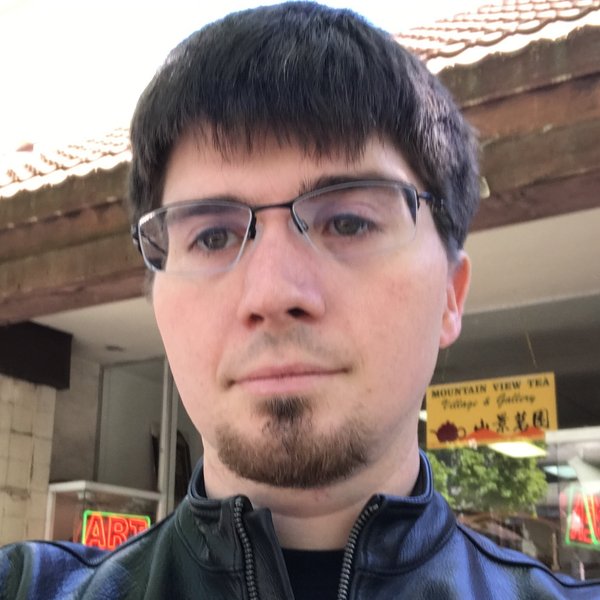
Photo by Ian Goodfellow / Wikimedia Commons / CC BY-SA 4.0
In 2014, as a PhD student, Goodfellow came up with Generative Adversarial Networks (GANs) — two neural networks competing against each other until one gets very good at creating realistic images. GANs powered most AI-generated images for the better part of a decade and are a direct ancestor of today's AI art tools. He's also a lead author of Deep Learning, the field's standard textbook.
Now: Research Scientist at Google DeepMind, working on LLM factuality and, notably, using reinforcement learning to help control nuclear fusion reactors.
2. Ashish Vaswani — lead architect of the Transformer
Vaswani led the 2017 Google paper "Attention Is All You Need," which introduced the Transformer — the architecture behind essentially every major generative AI model today, including GPT, Gemini, Claude, and Llama. Before Transformers, language models hit a scaling wall; the attention mechanism removed it.
Now: Co-founder and CEO of Essential AI, building foundation models alongside fellow Transformer co-author Niki Parmar.
3. Noam Shazeer — co-inventor of the Transformer, scaled it up
Co-author of the original Transformer paper and one of the field's most prolific systems researchers, Shazeer's work underpins mixture-of-experts models and much of the infrastructure that let Transformers scale to hundreds of billions of parameters. He later founded Character.AI, one of the first mass-market conversational AI products.
Now: As of June 2026, left Google DeepMind (where he returned in 2024 via Google's ~$2.7B deal with Character.AI) to lead Architecture Research at OpenAI.
4. Geoffrey Hinton — "the Godfather of AI"
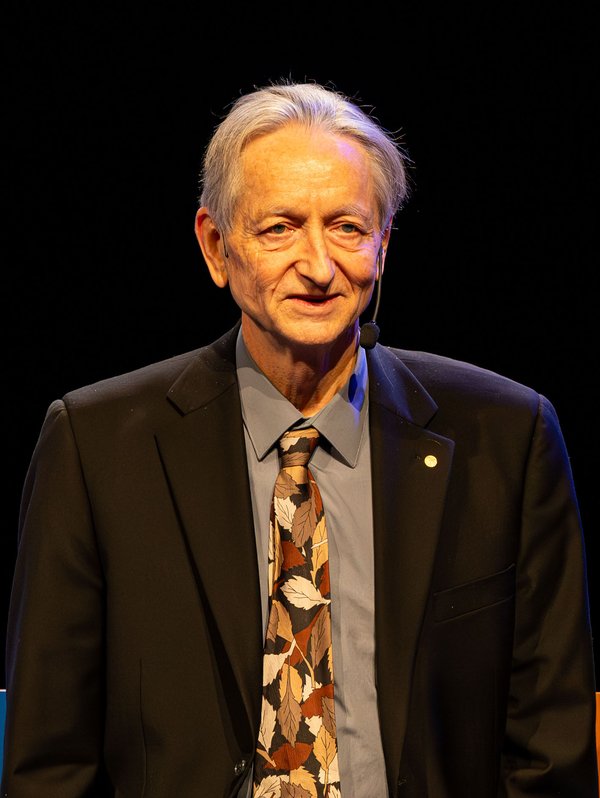
Photo by Arthur Petron / Wikimedia Commons / CC BY-SA 4.0
Decades of foundational work on backpropagation and neural networks culminated in 2012's AlexNet result — proof that deep learning could beat every prior computer vision method, and the spark that lit the modern AI era. Hinton shared the 2018 Turing Award (computing's Nobel) with Bengio and LeCun, and the 2024 Nobel Prize in Physics.
Now: Retired from Google in 2023 specifically to speak freely about AI risk, and remains one of the most prominent public voices warning about the dangers of advanced AI.
5. Yoshua Bengio — deep learning theorist and safety advocate
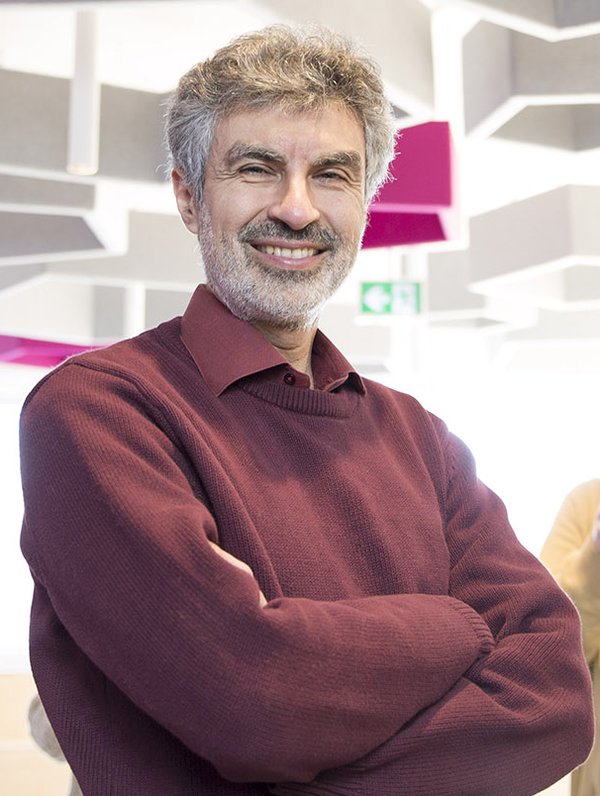
Photo by Maryse Boyce / Wikimedia Commons / CC BY 4.0
Alongside Hinton and LeCun, one of three researchers most responsible for making deep learning work — his lab's research on neural sequence models directly informed the Transformer. Co-recipient of the 2018 Turing Award.
Now: Founder and Scientific Director of Mila – Quebec AI Institute; leads the "International AI Safety Report" commissioned by international governments.
6. Yann LeCun — convolutional networks and self-supervised learning
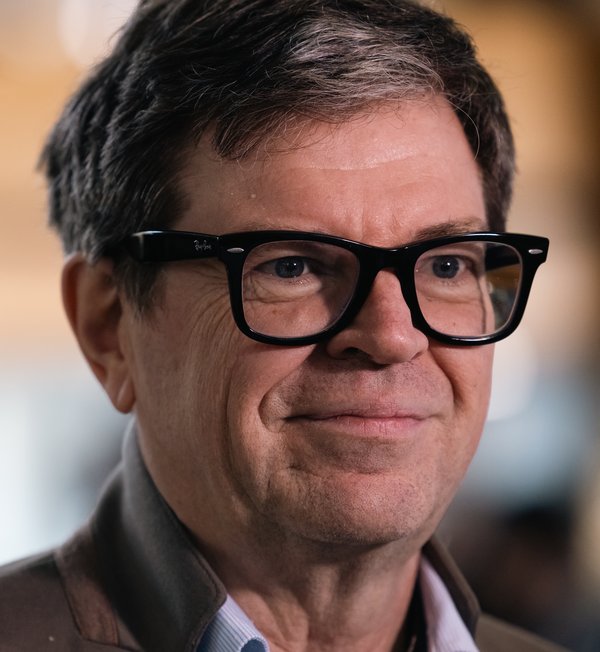
Photo by École polytechnique (Paris) / Wikimedia Commons / CC BY-SA 2.0
Pioneered convolutional neural networks (CNNs) in the late 1980s and 90s — the architecture behind nearly all computer vision and much of generative AI's visual side. As Meta's Chief AI Scientist from 2013, he built and ran FAIR, one of the most influential open AI research labs of the last decade.
Now: Left Meta at the end of 2025 over disagreements about Meta's shift to closed, product-driven LLMs. Now Executive Chairman of Advanced Machine Intelligence (AMI) Labs in Paris, pursuing "world models" as an alternative to scaling LLMs.
7. Ilya Sutskever — from AlexNet to GPT to "Safe Superintelligence"
Photo by Eladkarmel / Wikimedia Commons / CC BY-SA 4.0
Co-author of AlexNet (2012) and co-founder/Chief Scientist of OpenAI (2015–2024), where he drove the GPT model line and later OpenAI's reasoning-model work. Few individuals have touched more of the generative AI stack — vision, sequence modeling, and large language models.
Now: Co-founder and CEO of Safe Superintelligence Inc. (SSI), which has raised roughly $6B at a $32B valuation with one stated goal — build safe superintelligence, no interim product.
8. Alec Radford — the GPT and CLIP papers
Lead author on the original GPT and GPT-2 papers, and a lead author on CLIP, DALL·E, and Whisper — meaning he was hands-on for OpenAI's foundational work in both text generation and text-to-image AI. Widely regarded inside the field as one of the most technically influential, least publicly visible researchers in generative AI.
Now: Left OpenAI's full-time staff in 2024 to work independently, while continuing to informally advise OpenAI research.
9. Andrej Karpathy — OpenAI founding member, and AI's most-watched teacher
Photo by Gladwin Analytics / Wikimedia Commons / CC BY 3.0
OpenAI founding member and research scientist; led Tesla's Autopilot Vision team (2017–2022). Just as important: his Stanford course and YouTube series have trained a huge share of today's AI engineers. He coined the term "vibe coding."
Now: Founder and CEO of Eureka Labs, an AI-native education startup, launched in 2024.
10. Fei-Fei Li — the dataset that made deep learning possible
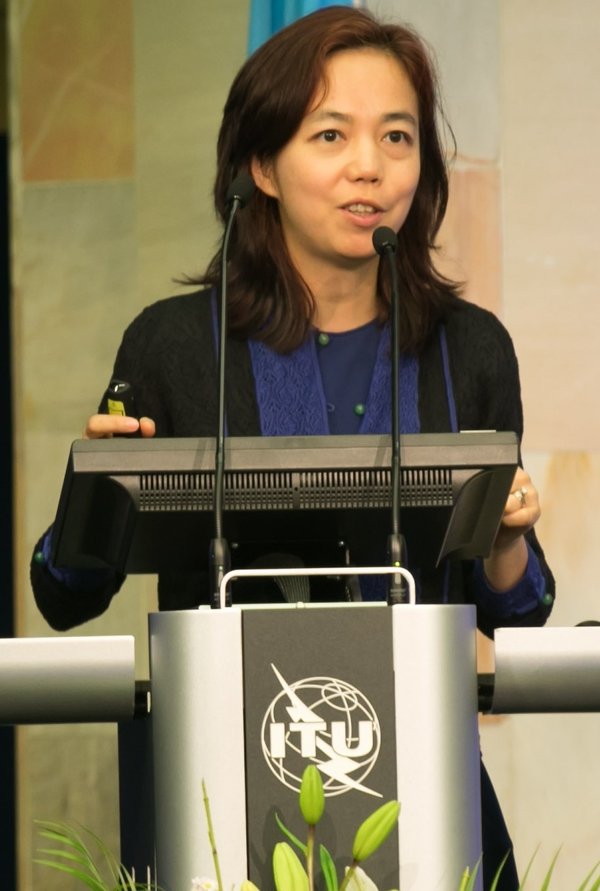
Photo by ITU Pictures / Wikimedia Commons / CC BY 2.0
Co-created ImageNet (2009), the 14-million-image labeled dataset that, once paired with AlexNet in 2012, proved deep learning could work at scale. Without ImageNet, that 2012 breakthrough doesn't happen on the same timeline. Long-time director of the Stanford AI Lab, and known in the field as the "Godmother of AI."
Now: Co-founder and CEO of World Labs, building "world models" for 3D and spatial intelligence — the company raised $1B in early 2026. Also continues as a Professor at Stanford.
11. Demis Hassabis — DeepMind and Gemini
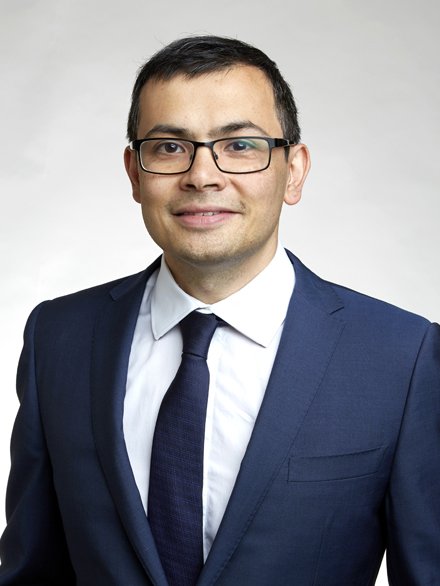
Photo by Duncan.Hull / Wikimedia Commons / CC BY-SA 4.0
Co-founded DeepMind in 2010 and led it through AlphaGo, AlphaFold — which effectively solved the 50-year-old protein-folding problem — and now Google's Gemini model family. AlphaFold remains one of the clearest proofs that this kind of AI can produce real scientific breakthroughs, not just chatbots.
Now: CEO of Google DeepMind. Awarded the 2024 Nobel Prize in Chemistry for AlphaFold.
12. Dario Amodei — scaling GPT-2/3, then Anthropic
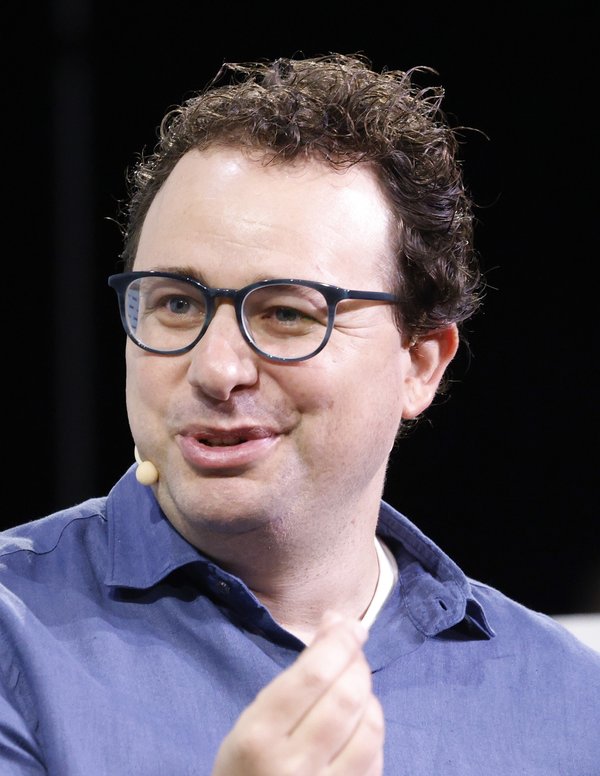
Photo by TechCrunch (Flickr) / Wikimedia Commons / CC BY 2.0
As VP of Research at OpenAI, led work on GPT-2 and GPT-3 and co-authored the scaling-law research showing model performance improves predictably with size, data, and compute — the empirical basis for the "just make it bigger" era of LLMs. Left OpenAI in 2021 over safety-culture disagreements to co-found Anthropic.
Now: CEO of Anthropic, maker of Claude.
13. Jared Kaplan — the scaling laws
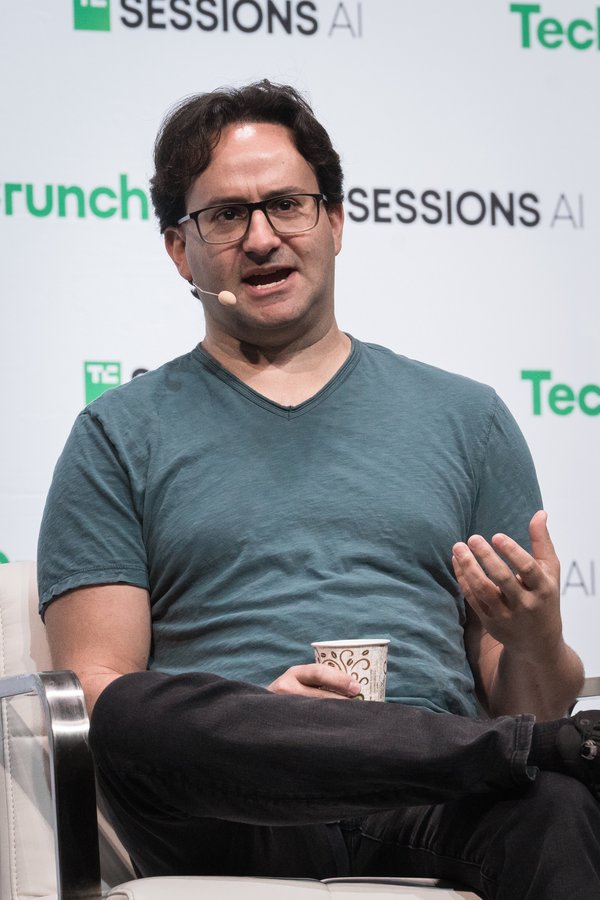
Photo by TechCrunch (Flickr) / Wikimedia Commons / CC BY 2.0
Lead author of "Scaling Laws for Neural Language Models" (2020) — the paper that gave the industry a predictive formula for how much better an LLM gets as you add parameters, data, and compute. That turned LLM development from guesswork into engineering that could justify billion-dollar training runs. Co-founded Anthropic in 2021.
Now: Chief Science Officer at Anthropic.
14. Sam Altman — scaling OpenAI into a product company
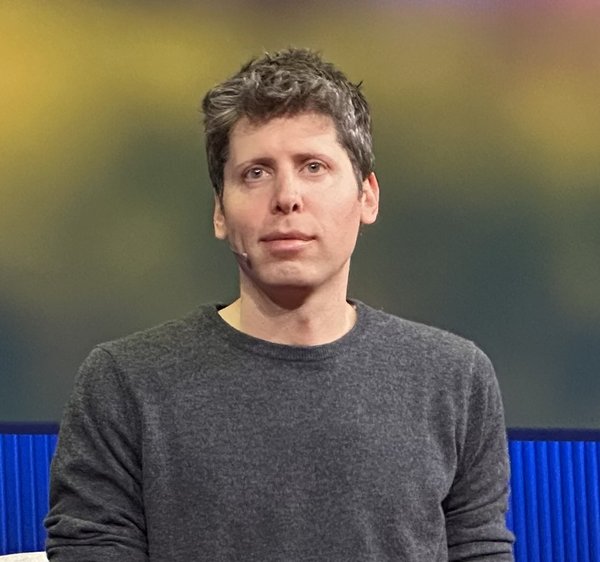
Photo by Steve Jurvetson / Wikimedia Commons / CC BY 2.0
As OpenAI's CEO since 2019, oversaw the leap from GPT research to ChatGPT — the product that took generative AI from a research topic to a 100-million-users-in-two-months phenomenon in November 2022, resetting the public's relationship with AI and kicking off the current investment wave.
Now: CEO of OpenAI, reportedly preparing for a public listing, continuing to expand OpenAI's consumer and enterprise products.
15. Mira Murati — shipping ChatGPT, DALL·E, and GPT-4
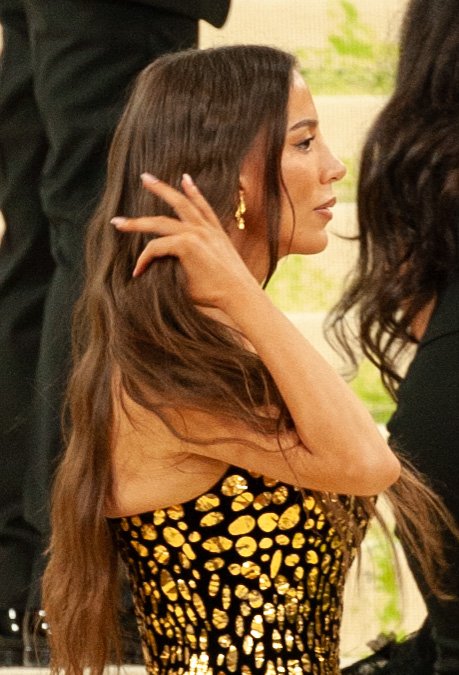
Photo by SWinxy / Wikimedia Commons / CC BY 4.0
As OpenAI's CTO (2018–2024), was the operational lead behind actually shipping ChatGPT, DALL·E, and GPT-4 — turning research into products people could use faster than any competitor. Served briefly as interim CEO during OpenAI's November 2023 board crisis.
Now: Founder and CEO of Thinking Machines Lab, launched February 2025 with a record $2B seed round. The company has shipped Tinker (a fine-tuning API) and an open-weight model called Inkling (July 2026).
How it all connects
Each breakthrough below built directly on the one before it:
graph TD;
  A["ImageNet — Fei-Fei Li, 2009"] --> B["AlexNet — Sutskever, Hinton, Krizhevsky, 2012"];
  B --> C["GANs — Goodfellow, 2014"];
  C --> D["Transformer — Vaswani, Shazeer, et al., 2017"];
  D --> E["Scaling Laws — Kaplan, Amodei, et al., 2020"];
  E --> F["GPT-1/2/3 — Radford, Sutskever, Amodei @ OpenAI"];
  F --> G["ChatGPT / DALL·E ship — Murati, Altman, 2022"];
  G --> H["Frontier labs diversify — Anthropic, DeepMind/Gemini, SSI, Thinking Machines, World Labs, AMI Labs"];
A note on scope and fairness
Any list like this is a judgment call, and reasonable people will disagree on exactly who belongs in a top 15. Others who narrowly missed this list but shaped the field enormously: John Schulman and Wojciech Zaremba (OpenAI co-founders, RLHF pioneers), Jakob Uszkoreit, Niki Parmar, Llion Jones, Aidan Gomez, and Łukasz Kaiser (fellow Transformer co-authors), Aravind Srinivas (Perplexity), Robin Rombach and the CompVis team (Stable Diffusion), and Jan Leike (alignment research). Generative AI's progress has genuinely been a team sport with a very long roster.
Compiled July 2026. Roles and affiliations in a field this fast-moving change often — treat "current role" details as accurate as of this date rather than permanent facts.